
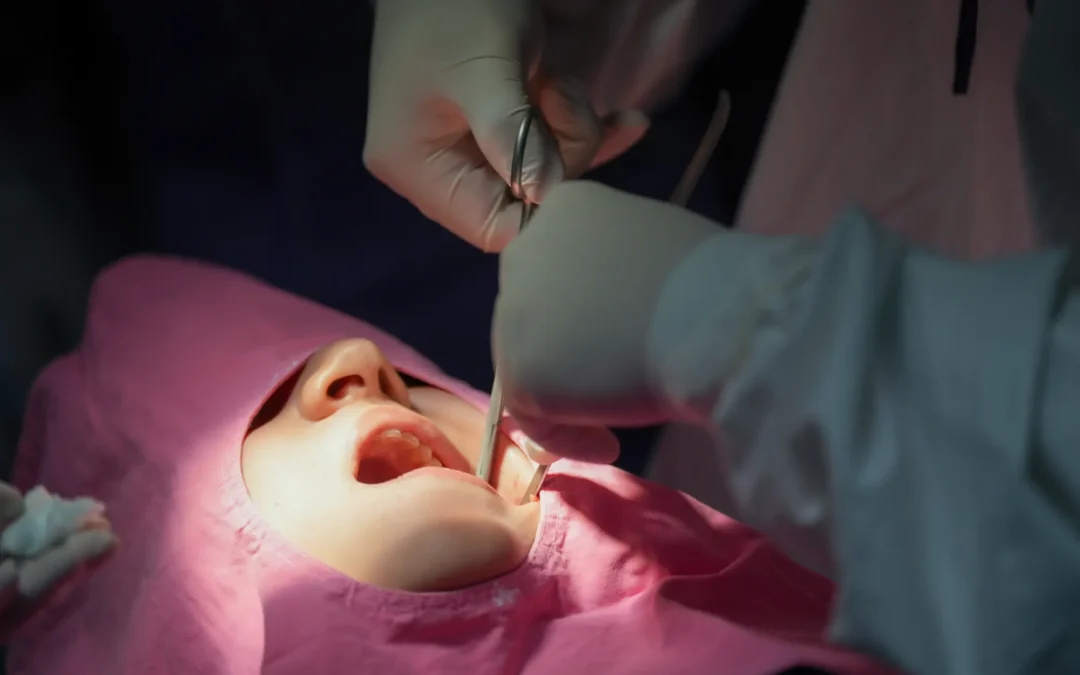
A dental implant is a precise procedure. We are placing a small post into your jawbone, in a space that also contains nerves, blood vessels, and other structures we need to protect. There is not much room for error, and small differences in position can affect how well an implant functions and how long it lasts.
That is why we rely on computer-guided implant surgery at Modern Dental in Richardson, TX. Dr. Kim has seen how much digital planning improves accuracy and predictability for patients receiving implants, and we want you to understand why it matters before you ever sit in the chair.
In this post, we will explain what computer-guided surgery is, how it helps us avoid vital structures, how it compares to traditional planning methods, and what the process looks like for you as a patient.
What Is Computer-Guided Implant Surgery?
Computer-guided surgery simply means that we gather the information for your implant digitally rather than relying on older, less detailed methods. Instead of estimating, we build your treatment plan from detailed data about your mouth.
That process starts with a 3D X-ray called a CBCT scan. Unlike a flat, two-dimensional image, a CBCT scan shows us the jaw in three dimensions, including the height and thickness of your bone. We also take digital scans of your teeth, which capture the shape and position of your teeth and gums without messy impression material.
Once we have both sets of information, we overlay them. Combining the 3D X-ray with the digital scan gives us a far more accurate picture of the bone levels we are working with. It shows us whether there is enough bone to support an implant, where the implant should sit, and whether anything in the area needs attention first. Everything we do afterward is based on that foundation.
How Digital Planning Helps Us Stay Away From Nerves, Arteries, and Other Vital Structures
The jaw is not an empty space. Running through and around it are nerves, arteries, and other blood vessels, along with other structures in the head and face that we want to stay well clear of. An implant that is placed too close to one of these structures can cause problems, which is why knowing exactly where they are matters so much.
With computer-guided planning, we can see these structures on your scan before the procedure begins. We use that information to plan the exact placement and position of the implant within your jaw, choosing a spot that has enough bone and keeps a safe distance from anything vital. This planning gives us a precise roadmap rather than a rough estimate.
This precision is a big part of why computer-guided surgery supports safer implant placement. It also supports long-term success. The position of an implant influences how well it integrates with your bone and how it holds up over the years, so getting it right from the start gives the implant its best chance of lasting. No technology can guarantee a perfect outcome in every case, but accurate planning removes a lot of guesswork and puts the odds in your favor.
Computer-Guided vs. Traditional Implant Planning
To understand why digital planning is such an improvement, it helps to look at how implant cases have traditionally been planned. Many traditional approaches depend less on digital technology. Planning may rely on a two-dimensional X-ray, which compresses a three-dimensional jaw into a flat image, and on physical impressions made with putty to create a model of your teeth.
Those methods can work, but they have limitations. A flat X-ray does not show the full depth and shape of the bone the way a 3D scan does. Physical impressions can also introduce variables. If the impression is distorted in any way, the model made from it may not be an accurate representation of your mouth.
Some patients make it harder to get a good impression in the first place. A person with a very sensitive gag reflex may not tolerate the impression material long enough to capture an accurate result. Patients with smaller mouths may find it difficult to fit the impression tray properly. In these situations, the dentist may end up working with less reliable data.
That matters because accurate information is the whole basis of safe planning. If the data is not reliable, it becomes harder to predict whether the implant will land in the right position, whether we are staying clear of vital structures, and whether there are areas that need work before placing an implant at all. Digital scanning avoids many of these problems. A quick scan is more comfortable for most patients, and it gives us a precise record to plan from.
Finding Problems Before the Implant Goes In
One of the most valuable things about computer-guided planning is what it lets us find before surgery. Your scan can reveal issues that would otherwise go unnoticed until they caused trouble, and addressing them first makes a real difference.
For example, we can see whether there are areas of infection that need attention. Infections and abscesses should be resolved before an implant is placed, because placing an implant in an area with an active infection can reduce its chances of lasting for many years. Finding these problems early lets us treat them first and then move forward on a healthier foundation.
The scan also shows us how much bone is available. If the bone in an area is thin or limited, we may recommend an additional procedure such as a bone graft to build up the site. In some cases, it makes sense to break treatment into steps. That can lengthen the overall timeline, but it also improves the chances that your implant will succeed in the future. We would rather take a little more time and give you a result that lasts than rush into a placement that is more likely to run into trouble.
This is one more way that computer-guided planning contributes to safer, more predictable outcomes. We are not just choosing where the implant goes. We are making sure the entire area is ready for it.
Seeing the Plan Together: Confidence and Less Stress
There is another benefit of digital planning that has nothing to do with the technical side: you get to see what we see. When we review your scans with you, you can look at the same images we are looking at and understand the plan for yourself.
Being able to visualize where the implant will go helps us lay out a clear path forward. You can see that there is enough room for the implant, and if we recommend an extra step like a bone graft, you can see exactly why. The recommendation is no longer something you have to take on faith. It is something you can see on the screen.
For many patients, that transparency makes a big difference in how they feel about the procedure. Walking through the plan together builds confidence, and patients tend to feel more comfortable coming in for the procedure when they know what to expect. Surgery can feel intimidating, and understanding the process takes a lot of the stress out of it.
Same-Day Placement and a Provisional Crown, When the Plan Allows
Careful digital planning can also make it possible to do more in a single visit, depending on the situation. To illustrate, consider a recent patient who was missing a front tooth and had a very limited window of time to get treatment because of a demanding work schedule. A visible gap in the front of the mouth is more than a cosmetic concern for someone who spends their days in front of other people.
Because we had everything planned digitally, we were able to complete the planning, position the implant precisely, and place a provisional crown during the same visit. When an implant goes in the front of the mouth, there is very little room to work with, so proper positioning is critical. Having a clear plan made that possible.
The provisional crown meant the patient left with a tooth in place rather than a gap. During the healing period, it looked like a natural tooth, and it was hard for anyone else to tell that surgery had taken place. The patient felt confident about the process and about the result. From there, healing takes time. We typically have patients return after a couple of months so we can check how things are coming along.
It is important to be clear that this approach is not right for every case. Whether same-day placement and a provisional crown are an option depends on your bone, the health of the area, and the plan we create together. If you need an infection treated or a bone graft first, we will take those steps before placing the implant. Our priority is always the long-term success of your implant, not speed for its own sake.
What to Expect at Your Implant Consultation
If you are considering an implant, the first step is a consultation, and it is simple to get started. Just give us a call and we will find a time that works for you.
Your consultation can be as short as about 15 minutes, or as long as you need, depending on how many questions you have. We want you to leave with a clear understanding of your options, so we never rush the conversation.
During the visit, we can take a 3D scan so we can assess the area where an implant is being considered. We can also take a digital scan of your teeth and walk you through the planning process, so you can see how the pieces fit together and what a treatment plan might look like for you.
We also know that cost and insurance are a major part of the decision. Our coordinator can look into your dental benefits and check whether implant treatment is a covered procedure under your plan. Coverage varies from plan to plan, so we always recommend confirming your specific benefits, and our team is happy to help with that. Many of these steps can be handled in one visit, so all it takes is scheduling a consultation to get started.
Ready to Learn More About Computer-Guided Implants?
Computer-guided implant surgery gives us a clearer, more accurate view of your mouth, helps us avoid nerves, arteries, and other vital structures, and allows us to address problems like infections and low bone levels before they affect your implant. It also lets you see the plan for yourself, which can make the entire process feel more comfortable.
If you are missing a tooth, or you are thinking about implants and want to understand your options, Dr. Kim and the team at Modern Dental would be glad to help. We proudly serve patients in Richardson, TX and the surrounding area. Call us at (972) 578-6633 to schedule your consultation and take the first step toward a confident, healthy smile.